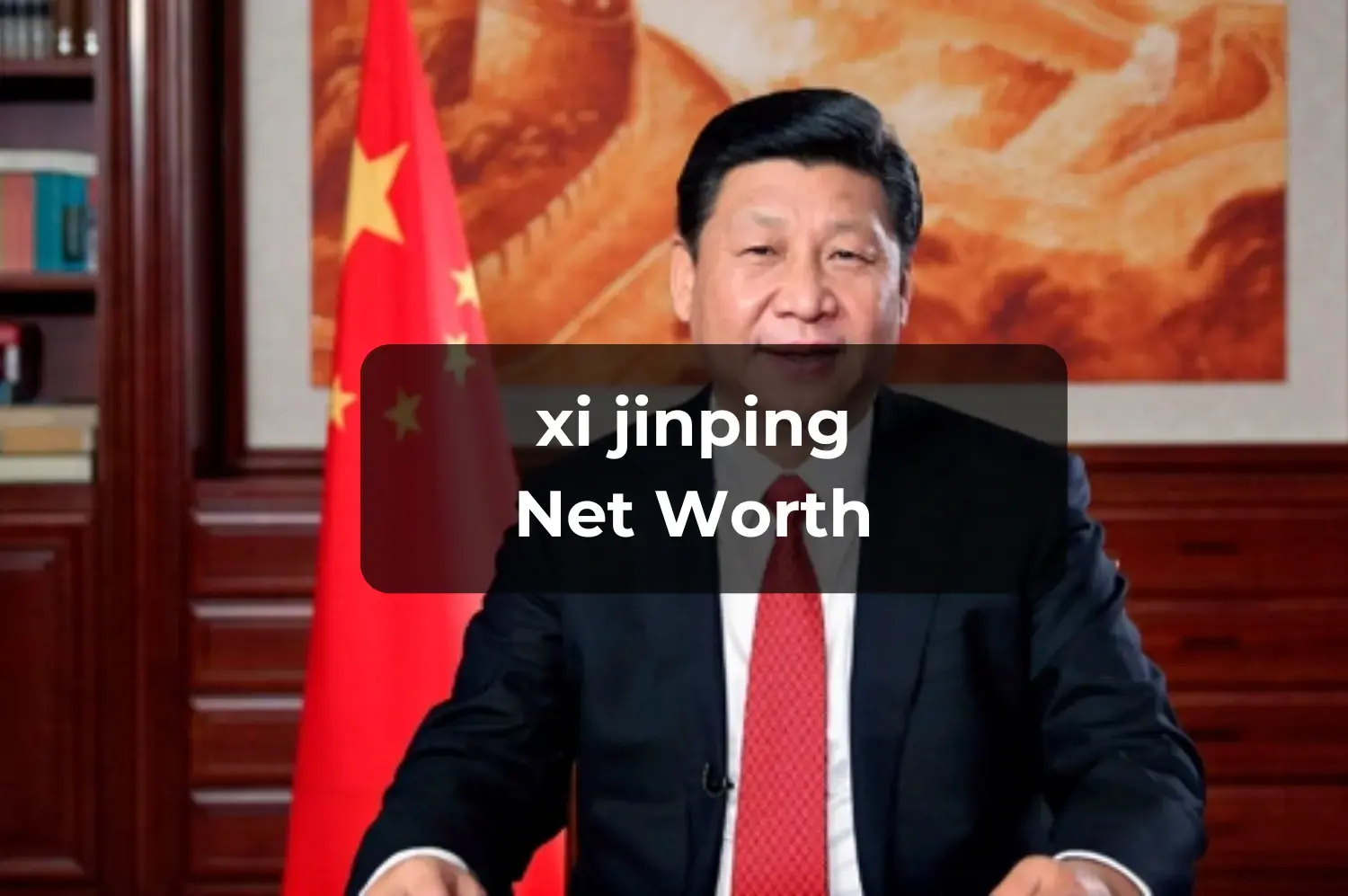

Xi Jinping, the General Secretary of the Chinese Communist Party (CCP) and President of China, holds one of the most powerful positions in the world. Despite his significant influence, the true extent of Xi Jinping’s net worth remains largely unknown. Estimates of his wealth range widely, with some suggesting it could be in the hundreds of millions, if not over a billion dollars. However, due to China’s lack of public wealth disclosures and the authoritarian leadership that characterizes his regime, Xi’s net worth is shrouded in mystery. This article dives into the available information and sheds light on the factors that contribute to his wealth accumulation.
Overview: What We Know (and What We Don’t) About Xi’s Wealth
When it comes to Xi Jinping’s net worth, much remains unclear. Official sources provide very little insight into the wealth of Chinese leaders. Unlike political leaders in many Western countries, Chinese leaders are not required to disclose their personal finances, making it hard to get an accurate picture of their wealth. What we do know comes from investigative reports, speculations, and unofficial data.
Xi Jinping’s wealth is a subject of ongoing debate. Some reports claim he has a net worth of over $700 million, while others suggest the figure is closer to $1 billion. However, these figures are not confirmed by any official documentation. In fact, much of the speculation about Xi’s wealth ties back to his family wealth and business ventures connected to his relatives.
Reported Estimates of Net Worth & Assets
There are numerous estimates of Xi Jinping’s net worth circulating in the media. Some suggest that Xi’s wealth comes from a combination of his family’s involvement in business ventures, investments, and land holdings. According to certain reports, his extended family has amassed wealth through business dealings that span both China and internationally.
However, these reports are often based on limited publicly available data and can’t directly link Xi Jinping to these assets. Many estimates of Xi’s net worth are speculative, relying on connections between his family’s wealth and Xi’s leadership roles. The Chinese Communist Party controls many state-owned enterprises, and it’s believed that the CCP often supports family members of influential leaders, which may explain how some of these wealth estimates are inflated.
Salary, Official Compensation & What “Salary” Means for Chinese Leaders
Xi Jinping earns an official salary as the President of China, though it’s far less than the wealth many speculate he has. Xi Jinping’s salary is reported to be around ¥152,121 RMB annually, which is equivalent to approximately $22,000 USD. This figure is considerably lower than the salaries of many leaders of major global powers.
However, the salary of Chinese leaders like Xi Jinping is only a small part of their wealth. In China’s political system, salary is just one component of a much larger web of power and influence. Leaders like Xi Jinping may not directly benefit financially from their official salaries, but their leadership positions provide significant opportunities for wealth accumulation and influence over state resources.
Family Background, Connections & Indirect Wealth — Why Hidden Wealth Claims Arise
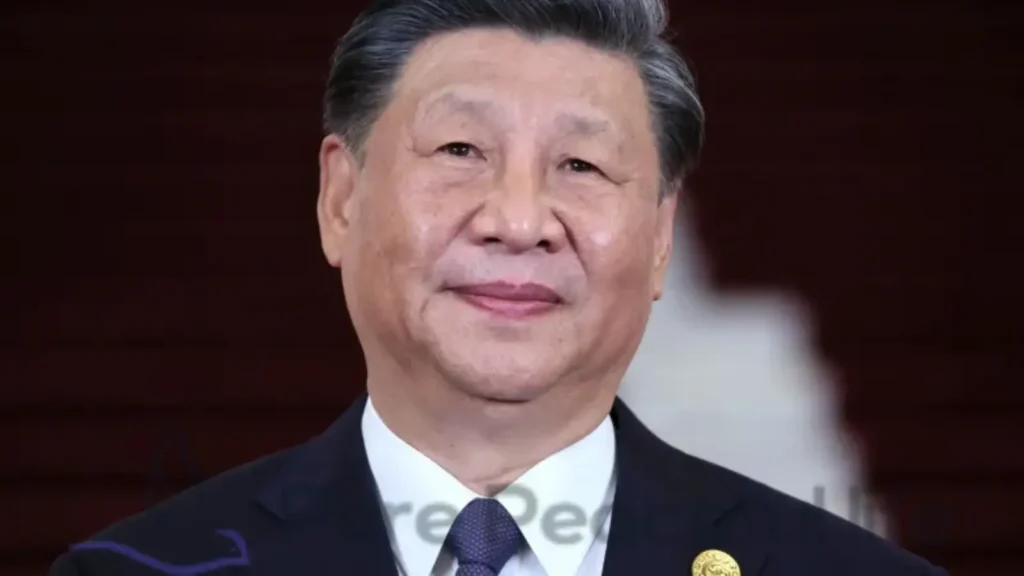
Xi Jinping comes from a prominent political family. His father, Xi Zhongxun, was a key figure in the Chinese Communist Party (CCP), holding several important leadership positions. Growing up in a political household gave Xi a unique advantage in his political ascent.
Xi’s family members, including his wife, Peng Liyuan, and his daughter, Xi Mingze, are also subjects of speculation when it comes to wealth. Peng Liyuan is a famous Chinese folk singer, and Xi Mingze graduated from Harvard University. While their direct wealth is not confirmed, their connection to Xi Jinping opens the door to the possibility of substantial financial assets, which fuels claims of hidden wealth within Xi’s family circle.
Many business ventures are linked to Xi’s family, which some claim has played a role in building significant wealth. These indirect connections are at the heart of many allegations regarding hidden wealth and have led to the belief that Xi’s net worth may be much higher than reported.
Early Life and Education
Xi Jinping was born on June 15, 1953, in Beijing, China. He is the second son of Xi Zhongxun, a veteran Chinese Communist leader. Xi’s early years were challenging; during Mao’s Cultural Revolution, his father was purged, and Xi was exiled to rural Yanchuan County. He spent much of his youth in a small village called Liangjiahe, where he joined the CCP and eventually became a party secretary.
Despite the hardships, Xi’s education was solid. He attended Beijing No. 25 School and later went on to Tsinghua University, where he studied chemical engineering and Marxism. These educational experiences laid the groundwork for his future role in Chinese politics, where party discipline and leadership positions were central to his career development.
Political Ascent and Rise Through the Ranks
Xi Jinping’s political ascent began in earnest in 1979. He started working for Geng Biao, a former subordinate of his father, who was then Vice Premier and Secretary General of the Central Military Commission. Over the next few decades, Xi held several important positions in the Communist Party of China across multiple provinces, including Hebei, Fujian, Zhejiang, and Shanghai. By 2007, he had become a member of the CCP‘s Politburo Standing Committee.
Xi’s rise to power continued when he was appointed Vice President of China in 2008 and Vice Chairman of the Central Military Commission. In 2012, he was elected as General Secretary of the CCP and Chairman of the Central Military Commission, cementing his role as the paramount leader of China.
As Leader of China: Roles, Power, Influence and Why Transparency on Wealth Is Limited
Since becoming General Secretary in 2012, Xi Jinping has consolidated his power. He holds multiple leadership positions within the CCP and the People’s Liberation Army (PLA). Xi’s leadership has been marked by significant economic reforms, authoritarian restrictions, and a political purge aimed at eliminating corruption within the CCP.
One of Xi’s most notable moves was the removal of term limits for the presidency, which means he could potentially hold onto power indefinitely. His leadership style is characterized by authoritarian control, and he has employed mass surveillance, censorship in China, and strict regulation of civil liberties to maintain control over the population.
While Xi’s wealth and assets are subject to constant scrutiny, transparency is limited. Public wealth disclosures in China are practically non-existent, and Xi Jinping has been careful to maintain the confidentiality of his financial affairs.
Allegations, Claims and Public Debate Over Hidden Wealth
As Xi Jinping has risen to power, allegations about his wealth and the wealth of his family members have surfaced. Many of these claims are rooted in the fact that Xi’s extended family, particularly his in-laws and relatives, have become highly successful in business. Xi Jinping’s wealth accumulation is often attributed to these family members, with some suggesting that their assets may be tied to Xi Jinping’s leadership.
In addition, foreign relations and investments linked to China’s foreign policy have fueled speculation about how wealth flows to the Chinese elite. Despite these allegations, concrete evidence linking Xi’s wealth to direct financial gains remains scarce.
What Analysts Say: Why Estimates Vary Widely and What’s More Likely
Analysts agree that Xi Jinping’s net worth is difficult to pin down due to the secretive nature of Chinese politics. Many estimates vary widely due to the lack of available data and the complex web of business dealings that involve family members, the CCP, and state-owned enterprises. Some analysts believe that Xi’s wealth could come from his position as General Secretary and the wealth generated by his family’s connections to the Chinese government.
It’s also likely that much of Xi’s wealth is tied to state-owned assets, business ventures, and investments made by his extended family. Due to the opaque nature of Chinese economic restructuring, determining Xi’s exact wealth remains challenging.
Conclusion: What We Can Conclude and What Remains Unknown
In conclusion, Xi Jinping’s net worth remains a mystery. While estimates vary, much of the speculation about his wealth is based on indirect sources such as his family’s business dealings and China’s lack of financial transparency. Despite his modest official salary, Xi Jinping has managed to consolidate significant power and wealth through his leadership positions in the Chinese Communist Party and the People’s Liberation Army.
However, until more detailed disclosures are made, we can only speculate on the true extent of Xi’s wealth. For now, the mystery surrounding his fortune is likely to continue, as the world watches the ongoing political and economic reforms under Xi Jinping’s leadership.
FAQs
What is Xi Jinping’s official salary?
Xi Jinping’s official salary as the President of China is approximately ¥152,121 RMB, or around $22,000 USD annually.
How much is Xi Jinping’s net worth?
Estimates of Xi Jinping’s net worth range from $700 million to over $1 billion, though exact figures are not confirmed.
Does Xi Jinping have family wealth?
Yes, much of the speculation about Xi’s wealth is tied to the business ventures and investments of his family members.
Why is Xi Jinping’s net worth difficult to verify?
Due to China’s lack of transparency in financial disclosures, Xi’s exact wealth is largely unverified and speculative.
How has Xi Jinping accumulated wealth?
Xi’s wealth is likely linked to his leadership role in the Chinese Communist Party and family wealth, along with investments and state-owned assets


 By
By


 Hometignig says: